

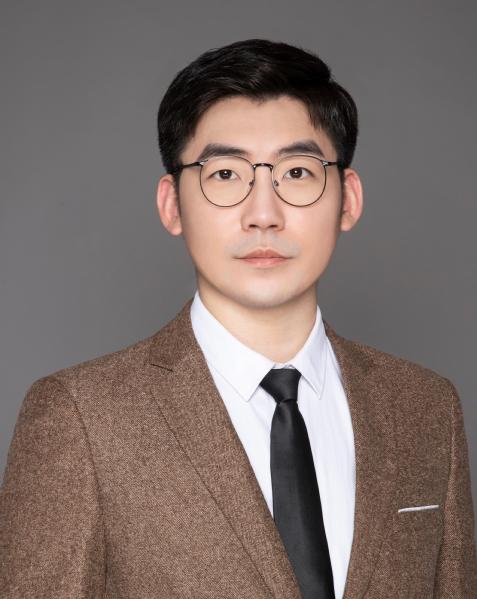
个人简历:
Dr. Zeng Zhang serves as a Tenure-track Assistant Professor, Principal Investigator (PI), and Director of the Translational Hemodynamics Lab (THe Lab) at the School of Biomedical Engineering. Dr. Zhang completed his undergraduate studies at Beihang University and subsequently pursued his doctoral degree at The Johns Hopkins University under the guidance of Dr. Joseph Katz, a member of the National Academy of Engineering (NAE), where he also conducted postdoctoral research. During his doctoral studies, he received joint training at The Johns Hopkins Medical Institute (2018) and the Children's Hospital of Philadelphia (2019–2023), conducting interdisciplinary research at the intersection of biomedical engineering, medical imaging, and clinical hemodynamics.
Dr. Zhang has been selected for the Shanghai Overseas High-Level Talent Program (Young Scholar). He serves as PI of a National Natural Science Foundation of China (NSFC) Young Scientists Fund project and a Shanghai Explorer Program project, and participates as Co-Investigator in an NSFC Key Program project.
Dr. Zhang's research centers on hemodynamics, with the overarching goal of developing proprietary technologies for hemodynamic imaging, computation, and analysis. This effort is organized along two synergistic lines of investigation: (i) super-resolution ultrasound imaging algorithms and microvascular hemodynamics, where he develops clinically oriented ultrasound localization microscopy for high-resolution, non-invasive observation and quantitative characterization of tissue microcirculation and cerebral functional states; and (ii) neural operator computational methods and macrovascular hemodynamics, where he integrates governing equations of fluid mechanics, vascular network topology, and clinical imaging data into AI models to build rapid, accurate, physically consistent, and interpretable patient-specific hemodynamic computation frameworks. He has published over ten peer-reviewed articles in leading international journals, with representative work appearing in Nature Communications and Nature Biomedical Engineering, and has presented at major international conferences including MICCAI, IEEE IUS, and WCCM. His research has received coverage from mainstream media outlets including Shanghai Observer and China News Service.
THe Lab warmly welcomes students with backgrounds in fluid mechanics, computer science and technology, mathematics and applied mathematics, mechanical engineering, and biomedical engineering to join the group for research and study!
研究领域:
Hemodynamic Measurement: Ultrasound Localization Microscopy (ULM), Echo Particle Image Velocimetry (Echo-PIV), Functional Ultrasound Imaging (fUS)
Hemodynamic Computation: Neural Operators, Differentiable Computing
Clinical Translation: Non-Invasive Quantitative Assessment and Risk Stratification for Neurocritical Care, Cerebrovascular Disease, and Intracranial Aneurysms
教学与课程:Data Structures and Algorithms (Python)
Data Structures and Algorithms (Python)
Medical Image Processing and Analysis
Numerical Methods
学术任职:
Membership:
Member of American Physical Society (APS)
Member of the Acoustical Society of America (ASA)
代表性论文:
Zhang, Zeng, Misun Hwang, Todd J. Kilbaugh, Anush Sridharan, and Joseph Katz. Cerebral microcirculation mapped by echo particle tracking velocimetry quantifies the intracranial pressure and detects ischemia. Nature communications 13, no. 1 (2022): 666.
Li, Maoyao, Wenxuan Wang, Ziyang Su, Jingjing Wu, Yang Yang, Longchen Wang, Yi Wang, Mickaël Tanter#, Zeng Zhang#, Fang Yuan#, and Yun Zheng#. Clinically translatable ultrasound localization microscopy reveals cerebrovascular remodelling and prognosis in patients with traumatic brain injury. Nature Biomedical Engineering (2026): 1–17.
实验室介绍:
The Translational Hemodynamics Lab (THe Lab) integrates cutting-edge theories and techniques from fluid mechanics, medical imaging, scientific computing, and artificial intelligence to develop proprietary technologies for hemodynamic imaging, computation, and analysis, providing non-invasive, quantitative, and precise clinical diagnostic tools for major cardiovascular and cerebrovascular diseases.
Research directions include:
Super-Resolution Ultrasound Hemodynamic Imaging
Neural Operator and Differentiable Hemodynamic Computing
Clinical Translation for Neurocritical Care and Cardio-Cerebrovascular Disease
