To continuously improve scientific literacy among the public and further strengthen science popularization education for young people, and drawing on the distinctive branded activities of the Shanghai Science and Technology Museum, Shuchen Li and Yanhao Wang, engineers from the Brain and Intelligence Development Laboratory of the School of Biomedical Engineering at ShanghaiTech University, were recently invited to participate in the Shanghai Science and Technology Museum’s “Science Train” public welfare science popularization program.
The two research professionals became science companions for young people, delivering engaging brain science–themed classes in the museum’s exhibition-hall mobile classroom. They transformed brain science knowledge that is often abstract and difficult to understand into an immersive scientific experience that children could perceive, play with, and learn from.
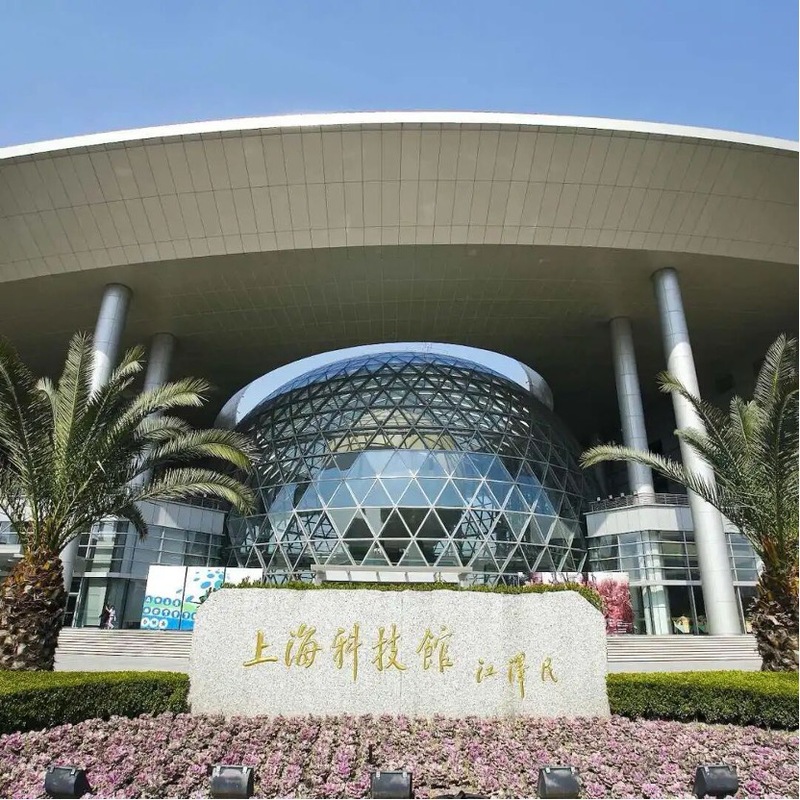
“Science Train” is a classic science popularization brand created by the Shanghai Science and Technology Museum in 2015. Breaking the boundaries of the traditional classroom, it uses exhibition halls and exhibits as platforms to host mobile classes. Researchers from various fields are invited to step out of the laboratory and into the public eye, guiding young people up close as they explore science and seek answers to their questions. Over the years, the program has created high-quality, immersive, and interactive science popularization experiences and has been widely loved by families and young people.
Fun Class Begins! Unlocking the Hidden Mysteries of the Brain
• Entering the Structure of the Brain: Exploring the Mysteries of Life Through Experiments
Engineer Shuchen Li opened the science popularization class by addressing common misconceptions about the brain. Children at the event became “little researchers” and took part in a fun black-box reasoning experiment: without seeing the actual objects, they used hand perception, detailed observation, and logical reasoning to identify items, personally experiencing the entire process by which the brain integrates sensory information and makes logical judgments.
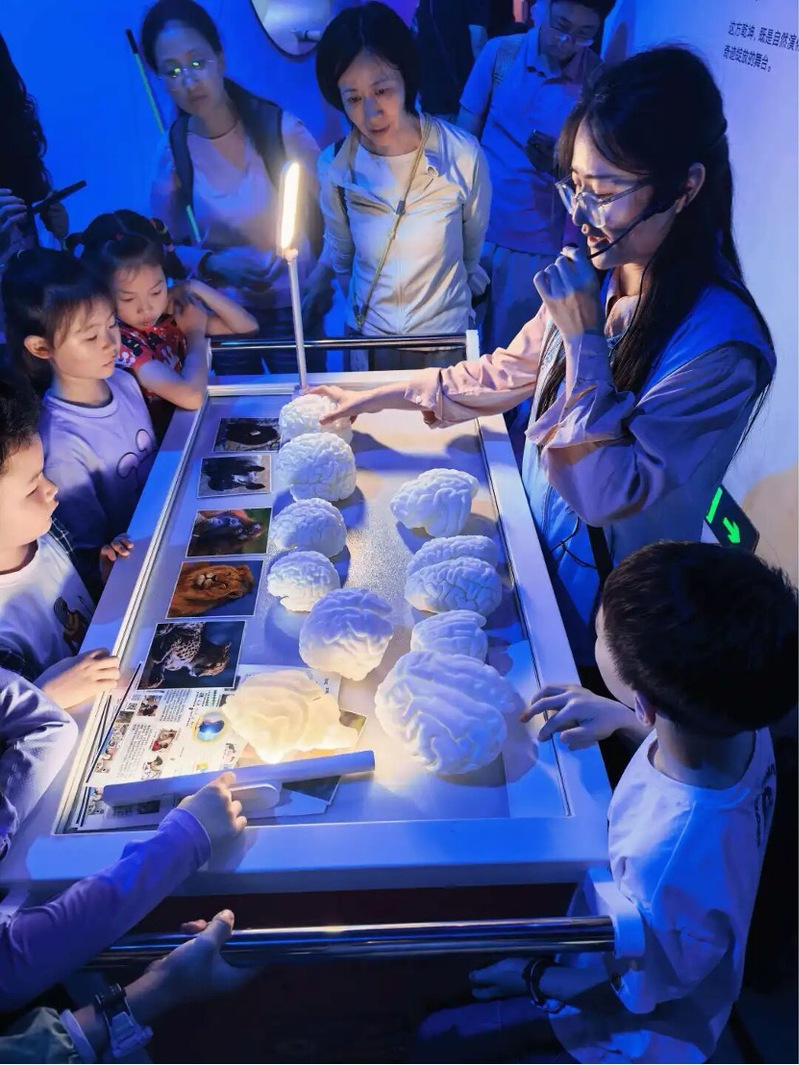
After the interactive experience, Shuchen Li used animal brain models and a physical model of the human brain to guide the children in intuitively comparing the brain structures of different species. She explained the relationship between brain structure and biological survival habits, while also introducing the patterns of human brain growth and development, helping children build scientific understanding and spark their interest in exploring life sciences.
• Exploring Attention: There Is a Scientific Explanation for Why the Brain “Wanders”
Engineer Yanhao Wang began with an everyday experience shared by everyone and delivered a themed class titled “Why Does the Brain Wander?” He used relaxed and interactive methods to explain the brain science principles behind attention.
The class included a variety of fun attention games, allowing children to understand how attention works while playing. Yanhao Wang then explained the basics of electroencephalography, or EEG, and research methods in accessible language, helping everyone learn how researchers use professional equipment to explore patterns of brain activity related to attention.
The most popular part among the children was the hands-on EEG experience. Under the guidance of staff members, the children wore portable EEG devices and observed real-time changes in their own brain waves under different conditions. They were able to directly “see” invisible brain activity, experience the unique charm of brain science up close, and appreciate both the fun and rigor of scientific research.
Deepening Science Popularization and Fulfilling Our Mission, Conveying the Warmth of Research
Shuchen Li and Yanhao Wang have been stationed at the Shanghai Science and Technology Museum for several days to deliver public welfare “Science Train” classes. This Sunday, they will continue to be on site to bring professional and engaging brain science education to more young people.
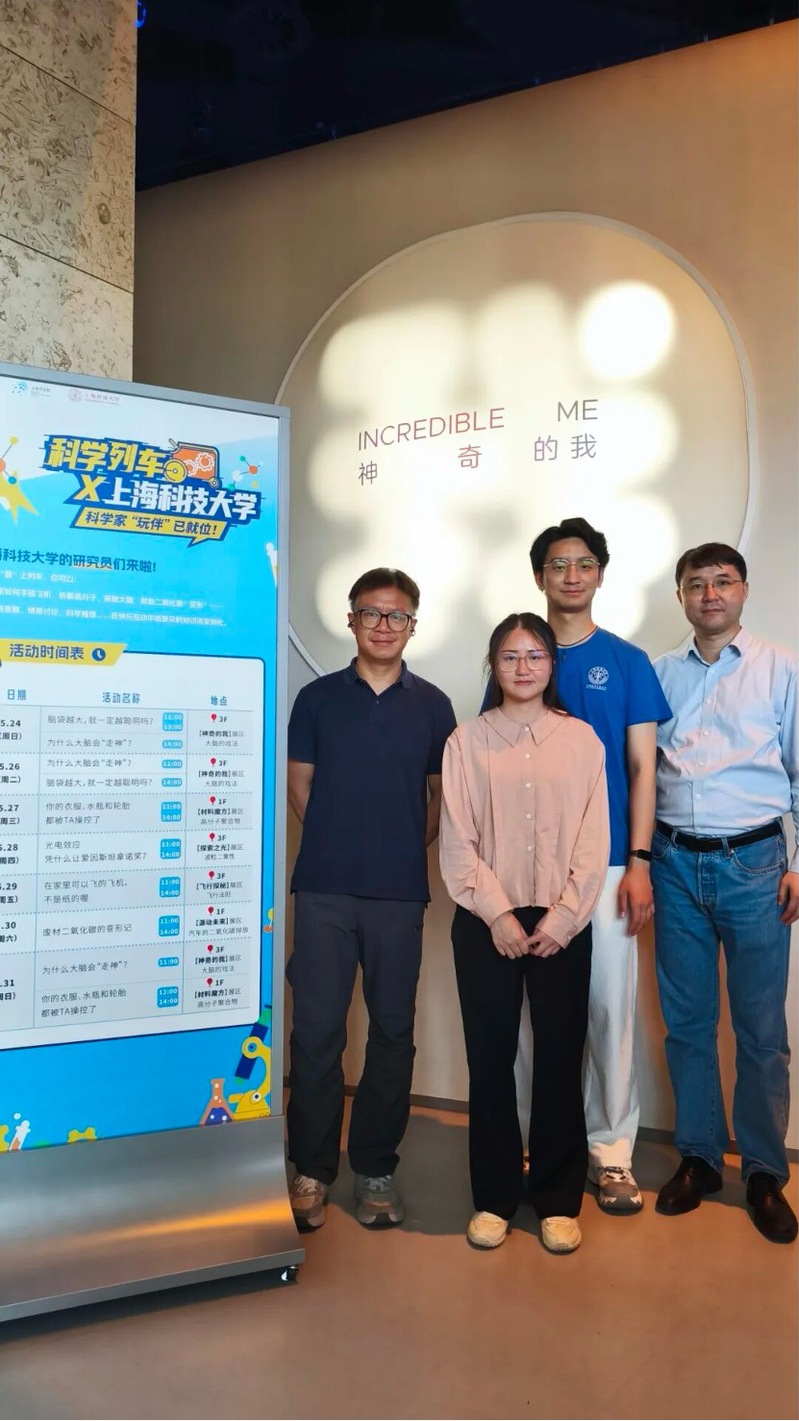
During the event, Vice Dean Qian Wang of our School and Associate Professor Han Zhang from the Brain and Intelligence Development Laboratory were present throughout to provide guidance. They introduced the School’s science popularization initiatives, as well as the value and significance of early brain science education for young people, to accompanying parents. This fully demonstrated the School’s educational philosophy of deepening scientific research while fulfilling its social responsibility in science popularization.
The School of Biomedical Engineering at ShanghaiTech University has long upheld the parallel advancement of scientific research and science popularization. It encourages researchers to step out of the laboratory and serve the public, relying on disciplinary and research strengths to bridge the gap between specialized scientific knowledge and public understanding. The Brain and Intelligence Development Laboratory of our School has participated in the Shanghai Science and Technology Festival for four consecutive years and regularly opens science popularization visits to primary and secondary school students, preschool children, and members of the public, allowing more people to enter the laboratory, experience the appeal of brain science research up close, and support the growth of scientific literacy among young people.
Brain and Intelligence Development Laboratory
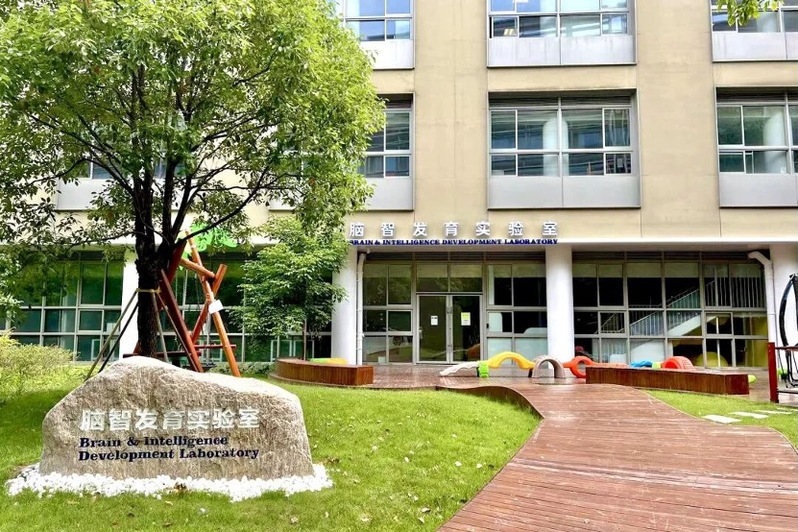
The Brain and Intelligence Development Laboratory, abbreviated as the BID Laboratory, is located on the first floor of the School of Biomedical Engineering building at ShanghaiTech University. Its design concept is based on China’s first large-scale cohort research project involving infants, young children, children, and adolescents: the Science and Technology Innovation 2030—“Brain Science and Brain-Inspired Intelligence Research” Major Project, also known as the “Brain Project,” as well as the experience of Founding Dean Professor Dinggang Shen’s team in infant cohort development and developmental research.
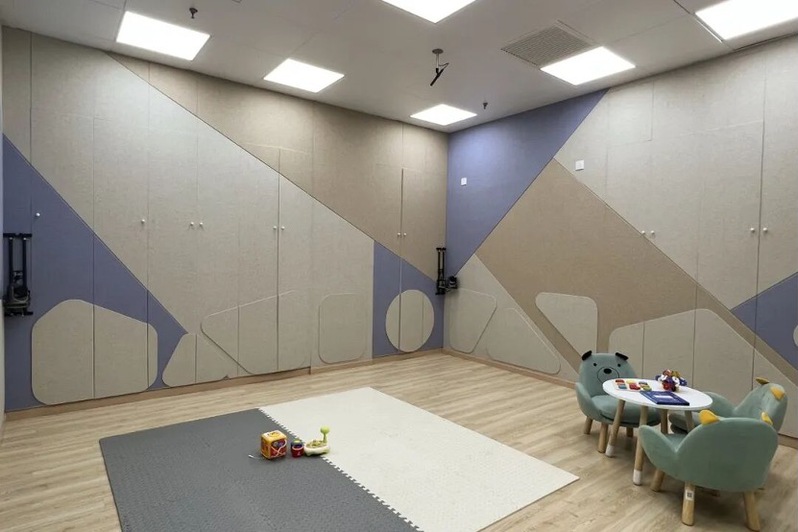
Targeting the physiological, psychological, social, and learning characteristics of infants, young children, and school-age children, the BID Laboratory has been designed and established as an integrated laboratory suitable for infants, young children, and school-age children, combining brain science research, data collection, science popularization education, experimental preparation, and experimental space.
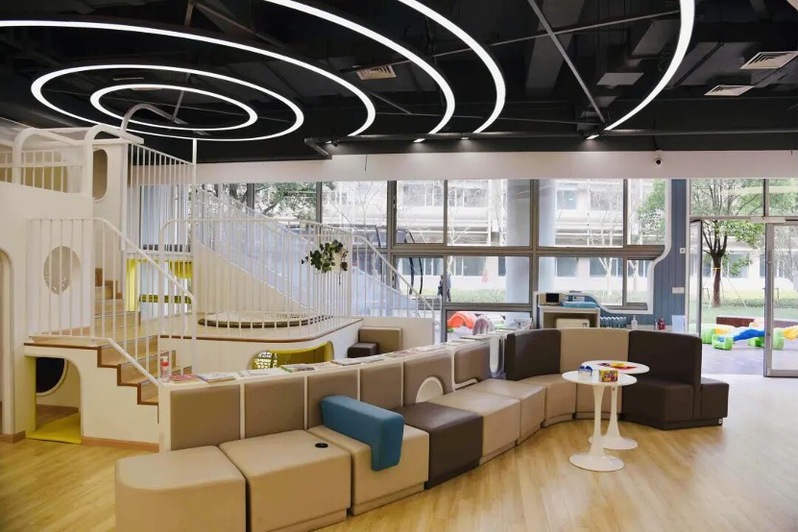
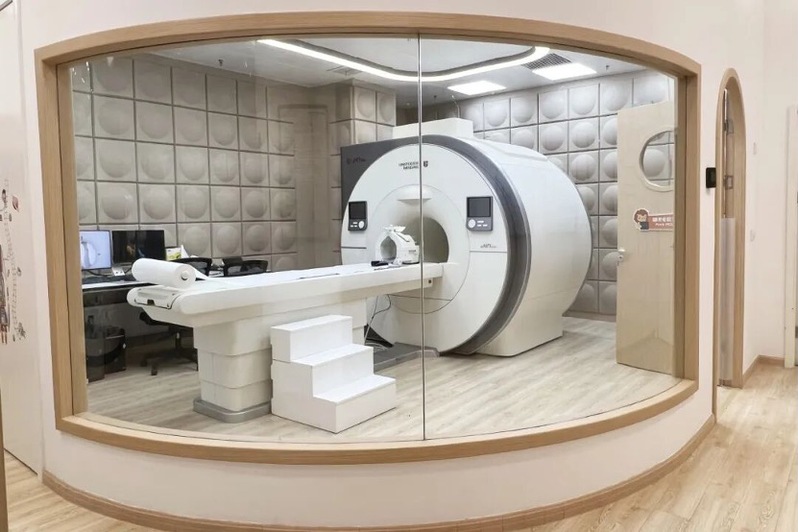
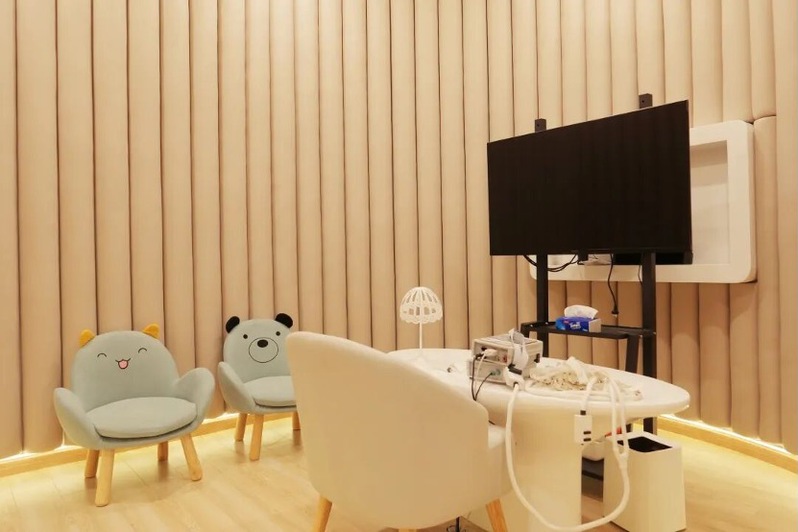
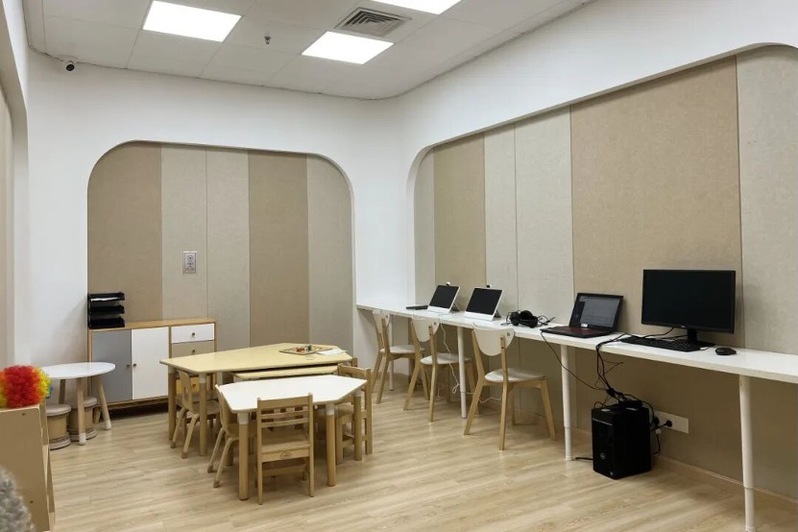
Unlike the mature brains of adults, the brains of newborns develop extremely rapidly during the first two years after birth, with brain volume and morphological features changing quickly. This places higher demands on data collection, imaging technologies, and data analysis techniques. Accurately measuring and analyzing early brain development maps and developmental trajectories in infants and young children can provide key evidence for the early identification, diagnosis, and even treatment of related diseases in infants and young children.
The Brain and Intelligence Development Cohort Project for Infants and Young Children Aged 0–6 will establish a large longitudinal cohort of more than 1,000 infants and young children aged 0–6, covering genetics, environment, imaging, and behavior. Through basic research on brain development, the project aims to identify and treat “unsolved diseases” such as autism and attention-deficit/hyperactivity disorder at an earlier stage, benefiting more families.
The China Brain and Intelligence Development Cohort for School-Age Children, aged 6–18, aims to focus on learning and mental health development among children and adolescents. Starting with children aged 6 and 7, it will establish both cross-sectional and longitudinal cohorts of school-age children, analyze the patterns of brain structure and functional development in children and adolescents, develop methods and pathways for enhancing brain and intelligence development, and support the establishment of a public service system for student mental health with Chinese characteristics, promoting the healthy psychological growth of hundreds of millions of children and adolescents.
The infant and young child cohort, aged 0–6, and the school-age child cohort, aged 6–18, are being conducted simultaneously at the School of Biomedical Engineering of ShanghaiTech University. This enables close tracking of infant and young child participants aged 0–6 and continued follow-up into childhood and adolescence, aged 6–18, achieving a seamless full-process study of brain and intelligence development from ages 0 to 18.
Parents who are interested are welcome to scan the QR code below to register for the Brain and Intelligence Development Program. Staff members will contact you subsequently.

Transportation Guide:
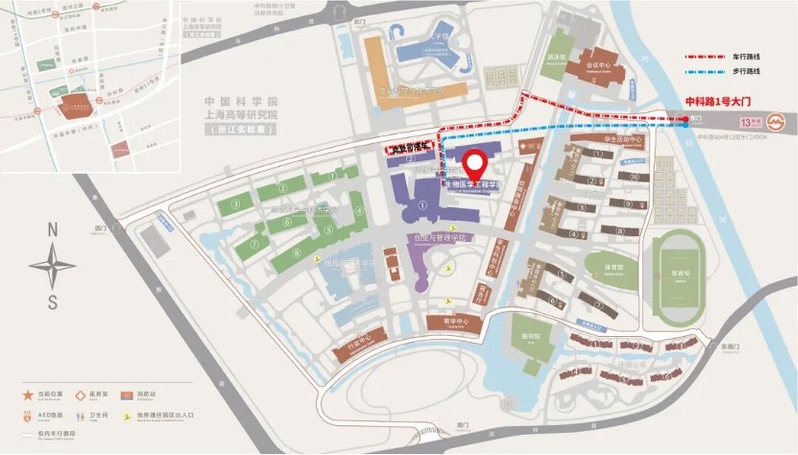
Address: No. 1 Zhongke Road, Pudong New Area, Shanghai
Room 105A, 1st Floor, School of Biomedical Engineering, ShanghaiTech University
Public Transportation: Metro Line 13, Zhongke Road Station
Exit 4 or Exit 5
By Car: Enter through Gate 1 at No. 1 Zhongke Road. Vehicles may be parked in the parking spaces on both sides.